All Posts By

FirstRank Digital

accelerated mobile pages

What Is AMP and How It Benefit Your Site

By | AMP, Digital Marketing, Search Engine Optimizaion

AMP stands for Accelerated Mobile Pages. It is an open-source project tailored to aid web publishers in the construction of mobile-optimized content that loads rapidly across all devices. With AMP, Google wants the same code to run on various devices or platforms and make the content appear instantaneously.

The median time for AMP-coded content is 0.7 seconds, whereas for non-AMP pages it is 22 seconds. We all know; nobody likes to wait to fetch information from the Internet. To ensure optimal user-experience for a web surfer, it is important to make the pages quicker. AMP ensures exactly that.

How Accelerated Mobile Pages (AMP) Can Benefit Your Site

According to a survey, approximately half of the Internet users expect a page to load within 2 seconds, and they tend to hit the back button from the site which takes more than 3 seconds to load. All though AMP fixes this problem, it is not limited to it. There are various other benefits that an AMP can bring to your site. Below are the most important ones.

1. Lightning Speed

That’s obvious, isn’t it? The purpose of AMP is to make a web page load quickly, and it serves that purpose very well by loading a page 15%-85% quicker than the normal ones. The speed of a website is an important factor for user-experience. Pages that load quickly provides a great user-friendly experience to visitors and makes them to stick to your website for a longer period.

2. Better Mobile Ranking

Currently, AMP is not an independent ranking factor, but still it can help you to improve your search engine ranking indirectly. AMP enhances mobile friendliness and page load speed times. These two factors have been the important ranking signal, which helps you to elevate your mobile ranking. Higher ranking in mobile search results brings more traffic to your website, and also builds credibility to attract new visitors.

3. Amplified Attention

Google is displaying Lightning Bolt symbol for Accelerated Mobile Pages. Users tend to love pages that load quickly. By displaying a small Lightning Bolt symbol in search results, Google is helping web surfers to identify pages that load quickly. Consequently, an Internet user will know the pages that load quickly, in the results page itself. As users tend to prefer quicker pages, click through rate of your website will automatically improve.

4. Depreciated Bounce Rate

Bounce Rate can be defined as the percentage of visitors who exit a given website after viewing only one page. Slow page loading time has been the major reason for higher Bounce Rate. With improved page loading time, your visitors will have no reason to abandon your website, on contrary they tend to stick to your website for a longer period of time. Due to this fact, bounce rate of your site reduces drastically.

5. Offers Crucial Analytics

Website visitor data play a significant role in the search engine optimization, as it exhibits visitors’ behaviour. AMP takes this fact into account and makes things easy for you. There are two tags available for the publishers to track visitor data:
● Visitor Counts
● New/returning Visitors
● Clicks
● Link Tracking, etc.

Do you want more traffic?

Get in contact with our team to chat about what we can do for your brand today.


    Google Search Updates

    Recent Google Updates and SEO Trends for 2018

    By | Google, Search Engine Optimizaion

    It is a well-known fact that Google makes frequent changes to its algorithm for the improvement of search results and user experience. These updates can alter your position in the online world. That is why, being up to date with Google algorithm updates is one of the best practices in search engine optimization (SEO). Here are the latest Google updates you need to know.

    Google Adds New SEO Audit Category To Chrome Extension

    On 5th February 2018, Google added, “SEO audits” category to the Lighthouse Chrome extension. You might already know Lighthouse is an auditing tool used for improving the quality of web pages by running performance, accessibility and various other audits. With the help of new SEO audit category, you can do basic health-check and discover the area of improvements in any web page. The current list of audits is very basic. Google is looking forward to adding more in-depth audits in the future.

    Google’s Speed Update

    Speed has been the ranking signal, but it is limited to desktop search. On 17th January 2018, Google announced that it would be using page speed as a ranking signal in mobile search from July 2018 onwards. The purpose of this update is to enhance the user-experience by prioritizing web pages that are faster across mobile devices. One can expect a negative impact on pages that are slow. Although speed will be a ranking factor, but the intent of a query is still a very strong signal. Therefore, slow pages can still hold a good rank if they have high-quality original content.

    Google Now Shows Real-World Data In PageSpeed Insights Tool

    Google on 10th January 2018, posted that PageSpeed tool is now improved with real-world data. In simple words, PageSpeed tool now has the ability to check how fast a page performs in the real world. Things were different prior to this update; PageSpeed would grade a page based on how many best practices are followed from the standard list. Obviously, it wasn’t accurate. After this update, PageSpeed tool will use data from the Chrome user experience report, and provide precise results and categorize a web page as fast, average or slow.

    Google Introduces New Search Console

    Google on 8th January 2018, announced that it would be making new search console available to everyone. Reports of the new search console will provide additional transparency into Google’s indexing and stateful communications between Google and website owners to rectify problems easily. Below are some highlights of the new search console:
    ● Its functionality will include search performance, index coverage, AMP status and job posting.
    ● Easy to analyze long-term trends with 16 months of data.
    ● Index coverage report will show perfectly indexed URLs, alerts for potential hurdles and reasons for not being indexed.
    ● Report will provide details of individual errors and cautions that Google recognized for AMP, Job posting and many other topics.

    Do you want more traffic?

    Get in contact with our team to chat about what we can do for your brand today.


      Mobile Friendly SEO

      Things You Need To Know About Google’s Mobile-Friendly Update

      By | Google, Web design, Website

      Google keeps updating its algorithm to bring better and relevant results for the search queries. On 21st April 2015, Google rolled out the mobile-friendly update. It is one of the major updates in this decade. The prime purpose of this update is to make Mobile Internet surfing easy and effortless. Here are the things you need to know about Google’s mobile-friendly update.

      Why Mobile-Friendly Update Was Necessary

      In the recent years, Mobile Internet users have exponentially increased. Today, more than 50% of Internet traffic comes from mobile phones, and it is expected to increase further. To make the Internet surfing more user-friendly, it is essential to make the websites mobile-friendly. Hence, Google’s mobile-friendly update was necessary to serve this purpose.

      Changes That Google Brought To Its Algorithm

      Google has updated its algorithm so that the search results should lead to content that is easily readable across all mobile phones. After the Mobile-Friendly Update, here are the qualities your website needs to have to rank well:

      ● Screen-Friendly: Content on a website should have fluid characteristics. That is the content should fit across various screen sizes.
      ● Easy To View: There should be no necessity of zooming-in, zooming-out or horizontal scrolling to view the entire page.
      ● Easy To Tap: Links and other elements in the website should be easy to tap.
      ● Scalable Fonts: Website should include fonts that scale for easier reading across all devices.
      ● Free From Flash Like Technologies. Etc.

      Google’s Mobile-Friendly Update:

      ● Does not affect search ranking on desktops.
      ● Solely affects search ranking on mobile phones.
      ● Applies to individual pages, not the entire website.
      ● Affects search results for all languages equally.

      How To Find Out Whether Your Site Is Mobile-Friendly or Not?

      You can test individual mobile pages with the help of Mobile-Friendly Test. You can also find out status of the full website via Mobile usability report in webmaster tools. Nonmobile-friendly pages of your website results in reduction of web traffic, as Google prioritizes mobile-friendly sites over nonmobile-friendly sites.

       Impact Of Google’s Mobile-Friendly Update

      After the update, mobile friendliness has become a ranking signal. Google’s Mobile-Friendly Update can bring positive or negative impact to your website depending on whether your web pages are mobile-friendly or not. The mobile-friendly website will have a better search engine ranking over the websites that aren’t mobile-friendly. Although it is important for a website to be mobile-friendly, but it is not the only criteria. A website should obviously have fresh, original and high-quality content.

      What If Your Website Fails Mobile-Friendly Test?

      Failing mobile-friendly test will definitely have a negative impact on website traffic and online visibility. Recommendations provided post Mobile-Friendly Test can do a pretty good job in optimizing your website for mobiles. With these recommendations or suggestions, you can easily fix mobile usability issues and errors across the site. Lack of responsive web design has been the major and the most popular reason to fail this test. It can be fixed only if the website is rebuilt.

      Do you want more traffic?

      Get in contact with our team to chat about what we can do for your brand today.


        SSL Certificate

        What Is An SSL Certificate and Why It Is Important For Your Website?

        By | Digital Marketing, SSL, Web Security

        What is an SSL certificate?

        SSL stands for Secure Sockets Layer. It is created for the purpose of establishing secure connection between a website and a browser. This is done by encrypting the data in the transit, and making it impossible to read. SSL certificates are usually installed on the pages that require to secure sensitive information such as personal information, credit card details or passwords.

        Websites that are secured by an SSL certificate have HTTPS (Hyper Text Transfer Protocol Secure) in their URL. The website in which you are reading this article, has HTTPS in the URL, indicating that it is secured. You can click on the lock symbol on the browser bar, and view corporate name of website owner & issuing authority.

        Why SSL Certificates Are Important For Your Website?

        As discussed earlier, SSL certificates ensure a secure connection between a website and a browser, but it also has other various importance. Below are the importance of SSL certificates for a website.

        Secures Sensitive Data

        Well, that’s obvious because SSL was created for this reason. The information submitted on a website goes through more than one computer before reaching the last destination. In this journey, any third-party can obtain the access to the data. An SSL certificate, encrypt the data and scramble it. Even though, if someone gets the access to the data, he will not be able to read it. This is because encrypted data can be read only with the help of encryption key.

        Elevates Customer Confidence

        According to a survey, 48% of online shoppers do not trust a website without valid trust seal. In today’s world, security is the biggest concern for everyone, including your website visitors. If you don’t offer proper security, then visitors hesitate to make a move. Advantage of having an SSL certificate is the sign that you can display on your site. This sign acts like a visible security signal and improves the customer’s trust on you.

        Necessary For Receiving Payments

        An SSL certificate meets Payment Card Industry (PCI) standards. It securely processes credit card payments with proper encryption by inserting an industry standard 180 bits of encryption. In simple words, if you don’t have an SSL certificate, then you can’t process credit cards. Due to this reason, SSL certificates are popular in E-commerce websites.

        Alerts For Non-Secure Websites

        Since last year, Google Chrome is providing security alerts for users if no SSL certificate is found on the page, which asks sensitive information. This alerts discourage users to continue browsing on your website. World’s most-used browser giving security alerts for your website can drastically shrink your online presence.

         Improves Your SEO Efforts

        SSL certificates are not only important for security, but they are also vital for search engine optimization. Google gives preference to HTTPS websites over HTTP websites, as they are trusted and certified. Since Google is the most popular search engine, it is important to stay on its good side. Moreover, having SSL certificate can help you achieve a minor boost in search engine ranking.

        Do you want more traffic?

        Get in contact with our team to chat about what we can do for your brand today.


          SEO Update

          How To Avoid Google Penalties

          By | Digital Marketing, Google, Local SEO, Search Engine Optimizaion

          People usually use tricks available on the Internet to cheat Google and achieve higher search engine ranking. Google is continuously updating its algorithm to catch websites that use these tricks and penalize them. Google is the most widely used search engine. Getting a penalty from Google can harm your online presence adversely. Here are some tips to avoid Google Penalty.

          Don’t Trade Links

          We all know links are the key factor for search engine ranking. Many people try to find a quicker method to get them. That is why they either buy, sell or exchange links. Natural link building takes time, and Google knows it. Buying links will fetch you high quantity of low quality links within short time, which usually result in penalty. Focus on natural link building methods and follow Google guidelines.

          Maintain Healthy Keyword Density

          Avoid Keyword Stuffing, as it can be hazardous. Keyword Stuffing can be defined as the process of overloading a web page with the keywords to manipulate a website’s ranking. Google penalizes websites for keyword stuffing. To avoid penalty, add an optimum number of keywords in the suitable places without spoiling readability. Make sure that keywords look natural and mingle with the content.

          Generate Genuine Content

          Do not copy the content from other pages. Google can discover duplicated content almost instantly and harm your rank in search engine results page. Content is the soul of a website. A unique content makes your website unique. Concentrate on creating genuine and high-quality content that interests your niche and creates more user engagement.

          Inspect Backlinks Regularly

          It is a good practice to check backlinks regularly and ensure that you are not receiving bad links from spammy website. Sometimes your competitors can send bad backlinks to your site to harm your online presence. Use Google Search Console to check backlinks. If you find spammy links, then use disavow tool. With the help of this tool, you can tell Google not to count spammy links as links to your site.

          Avoid Hidden Texts

          Hidden text is also known as invisible text since it is invisible to human eyes. These texts are made invisible by choosing same color for both text as well as background. Hidden texts are used to load keywords and manipulate search engine ranking. It may be invisible for humans, but not for Google. Hidden text can trigger a penalty, and you may lose your hard-earned visibility.

          Be Cautious With Guest Blogging

          The biggest myth about guest blogging is that it is dead. The fact is that guest blogging is still practiced. Matt Cutts has announced that Guest Blogging can negatively affect your website. This is because, sometimes the incoming links from guest blogging are irrelevant and not helpful for readers. To avoid the Google penalty, ensure your content is totally relevant to the blog you are posting on.

          Do you want more traffic?

          Get in contact with our team to chat about what we can do for your brand today.


            Google Analytics

            Optimize Your Website For SEO Using Google Analytics

            By | Digital Marketing, Google Analytics, Search Engine Optimizaion

            Google analytics is a completely free tool. It can be used in multiple ways to get insights on a website’s performance and visitors’ behaviour. Knowing and understanding the data provided by Google analytics on various aspects of your website, can help you in making better decisions for search engine optimization. Here are the uses of Google analytics.

            Discover How Visitors Reach Your Website

            Analyzing the source of traffic is important. It shows how your search engine optimization strategy is performing. Google analytics provides the insights on how visitors are being driven to your website. If you are running an SEO campaign, then you should expect more traffic from organic search. Below are the sources of traffic:
            ● Organic search
            Paid search
            ● Direct
            ● Email
            ● Referral
            ● Social
            ● Display
            ● Others

            Analyze The Keywords Used To Reach Your Website

            In search engine optimization, it is extremely important to know what keywords your visitors are using to reach you. With the help of Google Analytics, it is possible to know which word or set of words used in searches have resulted in most traffic. This information can be used to optimize the content on your website, to rank better.

            Page Popularity & Bounce Rate

            Google Analytics gives the information on average time spent on your web pages and bounce rates. From this, you can discover which pages are popular, and which pages need to be modified. Bounce Rate is the percentage of visitors who exit your site after visiting only one page. Below are the common reasons that lead to high Bounce Rate.
            ● Slow loading
            ● Confusing or unclear navigation
            ● Low quality content
            ● Content Mismatch

            Visitors Details and Behaviour

            Knowing who your visitors are and how they behave on your website is a key factor. With the help of Google Analytics, you can know important information of your visitors such as:
            ● Geographic location
            ● Age
            ● Gender
            ● Type of visitors: New or returning visitor
            ● Device used: Mobile, Desktop or tablet
            This data can help you to evolve your website and your marketing strategies to adapt your visitors.

            Traffic Flow

            Traffic flow is nothing but the journey of your visitors on your website. For example, if you have a jokes’ website, then Google Analytics will let you know how many people were driven to your homepage, from there how many left (Bounce Rate) and how many navigated to WhatsApp jokes’ page, from there how many went to “about us” and so on. This information can help you to maximize visitor retention and generate leads.

            Identify Slow Loading Page Times

            Google Analytics lets you know the time taken by your web pages to load. Slow loading pages can spoil the user experience and result in higher bounce rate. Optimizing a page to load faster is important for search engine ranking, and hence it has become a vital part of search engine optimization.

            Do you want more traffic?

            Get in contact with our team to chat about what we can do for your brand today.


              Website Optimization

              Top Ten Practices of Perfectly Optimized Websites

              By | Content Marketing, Digital Marketing, Search Engine Optimizaion, Web design, Website

              A website is a front door of your company, organization or business. Today, we have a wide range of approaches to build a quality website, but the key characteristics of a good website always remain same. If you are planning to build a new website, or working on an existing site to make it better, then here are the top ten features of a good website to emphasize.

              1. Genuine and Quality Content

              The ultimate goal of any search engine is to present unique, original and relevant content to the web surfers. Although fresh content gives you more visibility, but that should not be the only thing to focus on. Your content should be able to do below tasks:
              ● Answer visitors’ questions
              ● Feed all the necessary information
              ● Build trust
              ● Engage audience
              ● Make a visitor to take action

              2. Rapidity

              There are many online tools available to test speed of your website. Nobody likes a website which takes more time to load and respond. Slow speed makes a visitor to hit back button. A website which loads within a couple of seconds not only enhances usability, but also search engine ranking.

              3. Search Engine Optimized

              SEO stands for Search Engine Optimization. It is a technique, which helps you to achieve a higher rank for a particular search query of a web surfer. A website with great content is useless, if no one can find it. A search engine optimized site reaches more people and brings huge traffic.

              4. Browser Friendly

              There are several browsers available for various devices and operating systems. A website should be compatible with all browsers or at least with popular ones such as Google Chrome, Firefox, Opera, UC, Safari, Internet Explorer etc. A website which isn’t browser-friendly, may not work properly with some browsers and damage user experience.

              5. Relevant Appearance

              Your website should have relevant appearance, so that your audience can relate to it. For example, a website which provides the live cricket scores should smartly be decorated with former players, cricket grounds, trophies, winning moments, cricket tools, etc., so that a visitor connects with your website and a bond is established.

              6. Screen Friendly

              Today, the Internet can be accessed through the help of various devices such as mobiles, tablets, laptops and desktops. Each one of them comes with their own screen sizes. Your website should fit across these screen sizes. A website which isn’t screen-friendly makes visitors to scroll horizontally or zoom-in/zoom-out and spoil the user experience.

              7. Seamless Navigation

              Easy navigation takes a user to the desired places across your website and fulfills his or her needs. The attention span of a website visitor is extremely low. If visitors experience difficulty or confusion to find something, then they might exit your site quickly. Keep the navigation confusion-free and as simple as possible.

              8. Social Media Sharing Feature

              No doubt, search engine optimization is the best, but solely depending on it is not a good idea. A plugin for social media sharing can drive huge traffic to your website, especially if you have good products, blogs, research data, infographics, etc.

              9. Secure

              Web surfers are very much concerned about security. Make sure you follow all the guidelines to meet industry standards and ensure optimum security. Use encryption to protect and secure vital data such as passwords. A secure site builds trust and confidence of visitors.

              10. Clear CTA

              CTA stands for call to action. Terminal goal of any business/organization/company is to make a visitor to take the desired action. Keep easy, simple call to action buttons in appropriate places. At the end of page, it is a good practice to point a user to something useful such as:
              ● Request a quote
              ● Download
              ● Visit
              ● Share
              ● Become a member, etc.

              Have a Project in Mind?

              Get in contact with our team to chat about what we can do for your brand today.


                Responsive web design

                8 Essential Benefits of A Responsive Web Design

                By | Content Marketing, Search Engine Optimizaion, Web design, Website

                Responsive web design is an approach to web design, which makes web pages look good on all devices. It is achieved by shrinking, enlarging, hiding or moving the content of a web page with the help of CSS and HTML to fit across all screens.

                In recent years, an upsurge in worldwide smartphone users is noticed. Today, 57% of traffic comes from mobiles and tablets, and it is expected to increase further. Therefore, quality of being responsive has become indispensable for any website. Below are the advantages of a responsive web design.

                1. Seamless User Experience
                The prime goal of any website owner should be of providing a smooth, uninterrupted and optimal user experience. It is for this reason Google recommends responsive web design. A responsive web design gives a choice for your users to experience your website through any device.

                2. Save Money & Time
                Creating two versions of your website for desktop and smartphone users can be expensive and time consuming. The content of responsive website acts like fluid, it can easily fit across all screen sizes. Having one single website for all devices, can save money and time.

                3. Easy & Cost-Effective Maintenance
                Having two versions of your website for desktop and mobile users is a costly affair. You have to run search engine optimization for each version separately. With a responsive web design, you have just one website that you have to take care of. Obviously, maintaining one website is much easier than maintaining two.

                4. Google Friendly
                Google recommends responsive web design. It has already claimed that responsive web design will have a positive impact on search rankings on mobile devices. Where as, running multiple versions of your website is not search engine friendly. Same content in all versions can give rise to the problem of content duplication.

                5. Lower Bounce Rate
                Bounce Rate is a key factor, which tells the search engine, whether a website is providing quality content and user friendly experience to the visitors. A responsive website provides excellent user experience and makes a visitor stick to your website for a longer time and keeps the bounce rate to the minimum.

                6. Quicker Page Loading
                Who doesn’t like to have faster web pages? Page loading time is not only important for the visitors, but also for search engine ranking. Responsive web design decreases the time taken by a web page to load, especially for mobiles and tablets and further enhances browsing experience.

                7. Improved SEO
                Responsive web design compliment your search engine optimization strategy. Along with quality content, responsive web design also plays an important role in SEO. Improved backlink profile, reduced bounce rate and quicker loading, translate into greater visibility.

                8. Avoid Duplicate Content Penalties
                Having similar content on mobile version and desktop version of your website can get you penalized by Google algorithms and hurt your search engine ranking. With a responsive website, you can avoid content duplication penalties.

                Conclusion:
                A responsive web design provides numerous other benefits. We have listed the most important ones. It is not sensible for any business to ignore rapidly increasing mobile audience. Therefore, start reaping benefits of a responsive web design from your next website redesign.

                Have a project in Mind?

                Get in contact with our team to chat about what we can do for your brand today.


                  Black Hat SEO

                  10 Black Hat Techniques to Avoid

                  By | Black Hat SEO, Search Engine Optimizaion

                  Black hat techniques are the unethical techniques that go against search engine guidelines to achieve higher search ranking. It is not that easy to cheat the search engines as many black hat tricks promise. Google constantly improves its algorithms to provide better search results and to identify black hat techniques.

                  Google’s panda and penguin update are the best example. These algorithms are added for the sole purpose of penalizing sites that use black hat tactics. It is not possible to cheat search engines. Many people fall for these techniques and suffer penalties. Below are the most common black hat techniques.

                  1. Link Exchange
                  Basically, Link Exchange works on the policy – If you link my site, then I will link yours. Usually, beginners consider Link Exchanges as a mutual help and are not aware that it is considered as a black hat technique. Unnatural links are usually irrelevant and possess low quality. They can hamper your SEO efforts.

                  Links are the key factor to rank a website and are considered as a vote to site. A website should concentrate more on building natural links. Generating unique high-quality content is the best method to attract links naturally. Read Google guidelines for link building and follow them.

                  2. Cloaking
                  Cloaking is a practice that violates webmaster guidelines, and shows different content to web users and Google, to rank high on the certain keywords. For example, your web code tells Google that you provide news and show users a wide range of furniture instead. Such activity spoils web experience.

                  Google has officially announced cloaking as a black hat SEO technique. Sophisticated and advanced algorithms of Google can easily catch cloaking and penalize your website by lowering search ranking or ban it completely from the search engine.

                  3. Invisible Text
                  Invisible text, popularly known as hidden text or fake text, is used for spamming search engines. Here, in order to stuff extra keywords, texts are made invisible by using same color for the text and background. For example, purple text on a purple background can be invisible for any human being.

                  This method can trick humans but not Google bots. These search engine bots are equipped with an automated system, that goes through your source code, and traces every single detail of your website. Don’t use any tactics, which can risk your online presence.

                  4. Keyword Stuffing
                  Keyword stuffing is a practice of overloading a content with keywords and making search engines believe the page is relevant for the particular keywords to attain a higher search engine ranking. This black hat technique can do more harm than good.

                  Search engines are well aware of such practices. They can penalize your website for keyword stuffing or remove it completely from the index. Write content keeping audience in mind and not solely for the search engines. Always remember that a content should look natural.

                  5. Page Swapping
                  Page swapping is also popularly known as Bait-and-Switch. It is a black hat SEO technique, where you get a page indexed & ranked, and then change the entire content to something else, which has commercial value.

                  The work of a search engine is to send users to the content which they are searching with the help of keywords. Page swapping takes a user to a page that is totally different. Search engine can aggressively penalize or ban your website for swapping of a page.

                  6. Buying Links
                  Paid links are usually irrelevant and have low quality. Nowadays, you can buy a bunch of links from the sites like Fiverr. Trust us, buying links is nothing but spending money on something, which is going to hurt you badly.

                  Search engines are smart. Google’s penguin update can catch a website when it gets a lots of links over a short period of time, even from relevant sites. Link building takes time. Be patient and focus on natural methods to avoid search engine penalties.

                  7. Duplicate Content
                  Wondering why we are mentioning duplication of a content as a black hat trick? That’s because even today, it is popular and people copy paste the content from others. The main goal of a search engine is to present unique and high-quality content, and that’s why copying content is rightfully considered as one of the worst black hat techniques. Moreover, stealing content is a waste of time. Search engine can catch duplicated content almost instantly.

                  8. Content Automation
                  Today we have plenty of tools and softwares to generate the content for any particular topic. The process of creating such content is called content automation. Content generated by such method may be unique, but it’s poor quality spoils the readability.

                  Hence, search engines do not entertain content automation and penalize websites, which uses any such content. It is sensible to hire a content writer, who can create unique and quality content to convey the correct message to your audience.

                  9. Doorway Pages
                  Ever experienced a search result taking you to some unexpected and irrelevant page? That is due to a doorway page. They are also known as jump page, gateway page and bridge page. Doorway Pages are the pages which are designed solely to attain higher search rank for specific keywords and send visitors from a chosen result to a different landing page. Search engine algorithms can easily pick doorway pages and penalize aggressively.

                  10. Comment Spamming
                  In order to generate bulk backlinks to your website in a very short period a black hatter uses special software to leave links in comments of various blogs with the intention to elevate search engine ranking. Just like every other black hat tactic, even comment spamming is identified by search engines. Doing honest and ethical commenting may take time, but it provides quality backlinks.

                  Closing Note:
                  There are numerous black hat tactics, we have mentioned the most common ones. Most of the people opt these black hat strategies to attain higher search engine ranking in the shortest period of time for free. As a result of which they get penalized and spend money on penalty recovery.

                  Do you want more traffic?

                  Get in contact with our team to chat about what we can do for your brand today.


                    PPC VS SEO

                    Top Reasons To Run PPC And SEO Together

                    By | Digital Marketing, Google, Search Engine Optimizaion, SEO & PPC

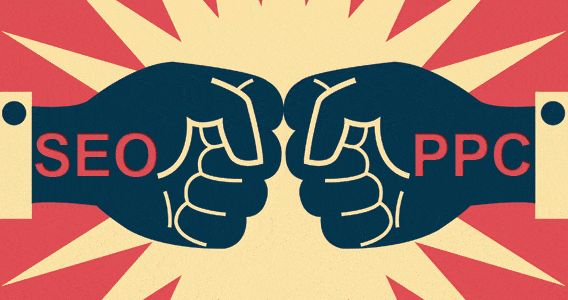
                    It is a well-known fact that SEO and PPC are different. But they don’t conflict with each other. On contrary, they compliment each other in multiple ways. If you are running SEO and PPC separately, then you are missing out some awesome benefits of running search engine optimization and pay per click campaign simultaneously. Below are the top reasons why you should be running SEO and PPC together.

                    DOMINATE SERP

                    Most of the people have a common misconception that there is no necessity of PPC, if search engine optimization is working fine. Running PPC and SEO in parallel, doubles your presence on search engine results page and gives an impression that you have a well-established online presence. Dominating SERP always result in multiplied web traffic.

                    PPC HELPS YOU TO EVOLVE ORGANIC CONTENT STRATEGY

                    We all know PPC gives quick results compared to search engine optimization. You can smartly test page attributes with the help of pay per click advertisements. A best-performing PPC ad copy gives you a great information that is necessary to create title tags, meta descriptions and page content to rank organically well.

                    SITE SEARCH DATA CAN HELP PPC

                    Figuring out which keywords your customers are using to find your product or service is an important part of a pay per click strategy. Analyzing site search data can provide the beneficial insights on keywords by feeding two extremely important aspects of the customers:
                    1. Customer needs
                    2. Search habits

                    SEO CAN IMPROVE PPC CONVERSION

                    Making a landing page relevant to Ad copy is important to have a better conversion. A customer expects that he should be taken to a page that closely matches the message in ad copy.
                    PPC teams usually spend more time on testing and evolving ads. They have little control or authority over a client’s website. If you are running SEO and PPC simultaneously, then SEO team can do this job easily and optimize your landing page.

                    Fill THE GAP EASILY

                    Search engine algorithms are constantly updated. Due to this, search results are constantly fluctuating. In simple words, if your site holds a top rank for a keyword this week, then it might not be visible in first page of SERPs next week. This makes you lose your hard-earned online presence. In such cases, PPC team can easily fill the gap by increasing keyword bids or by setting up relevant ads.

                    TEST IDEAS

                    When it comes to results, search engine optimization is slow. It means, if you make few changes to your site, then you have to wait for a long time to know the result. There is no scope of testing in search engine optimization.
                    Unlike SEO, PPC is amazingly instant. Within no time, you get data on how a PPC campaign is performing. What works for PPC usually works for SEO. Therefore, you can test new ideas by the help of PPC before implementing in SEO.

                    SHARE KEYWORD DATA

                    Running SEO and PPC campaign together provide you double data and hence one can have continuous access to best-performing keywords. Analyzing this data gives you plenty of information, which is necessary to make better decisions throughout the campaign. Such insightful data is not available when SEO and PPC are used separately.

                    SEO CAN REDUCE PPC COST

                    In certain industries, there are keywords that are too expensive to use for PPC. Such costly keywords can eat up your budget. If you are running SEO and PPC together, then you can use these expensive keywords for search engine optimization and target inexpensive keywords with PPC campaigns. In this way, you can reduce the cost of PPC and also achieve a better overall online presence.