All Posts By

FirstRank Digital

Website Design Service

6 Reasons Why Your Website Needs an SEO Audit

By | Search Engine Optimizaion, Website

An SEO audit can be defined as the analysis of a website based on the key factors that search engine uses for presenting organic results. It helps in preventing and resolving of issues that may harm your online presence or spoil user-friendly experience. Below are the reasons why your website needs an SEO audit.

1. Pinpoints Technical Problems

An SEO audit will help you to discover technical issues that act like hurdles for search engine optimization (SEO). Fixing these technical problems will help Google to crawl your website better. Below are some important technical elements that an SEO audit covers.

  • Site Speed
  • Current crawlability
  • Redirects and Errors
  • URL structure and Site Architecture

2. Spots On-Page Issues

An on-page SEO can be defined as modifications made within the website to improve its search engine ranking. An SEO audit will help you to find out the issues within the website which might weaken your search engine ranking. A Good SEO audit will analyze following elements of on-page SEO.

  • Meta Descriptions and Titles
  • Headers & Content
  • Internal Linking, etc.

3. Analyses Competition

Keeping an eye on your competitors is an important part of search engine optimization. An SEO audit is important to identify competition because they are fighting to achieve the same online position, which you are trying to achieve. A good SEO audit will identify your competitor’s strategy, so that you can come up with a foolproof strategy to beat your competitors.

4. Inspects Backlinks

Links play a vital role in a search engine optimization strategy. It can elevate or demote your search engine ranking. An SEO audit will inspect all the links to your website and reveal the below things about the backlinks.

  • Number of backlinks you have
  • Quality of the backlinks
  • Number of backlinks your competitors have, etc.

Low-quality backlinks harm your search engine ranking. These backlinks are eliminated after the SEO audit.

4. Helps in Content Creation

Content is the king, and Google knows that. SEO audit provides huge data over various aspects of your site. Understanding this data will help you in creating a better and relevant content for your website. Good content is evergreen; it has been and it will continue to be the most important aspect of a website.

5. Improves Your Business

SEO audits are not expensive; some sites even offer it for free. With the help of results provided by SEO audit, you can make modifications and fine adjustments to your website that are necessary for optimal performance. After the alterations made to your website, you will notice an increment in the web traffic, which tend to improve your business.

Bottom Line:

SEO audits are extremely beneficial. It will help you to discover the existing problems early and fix them before causing any major damage. Consequently, it saves a lot of money and time. It is advisable to do a thorough SEO audit at least once in a year.

Content Marketing

The Importance Of Quality Content For Search Engine Optimization (SEO)

By | Search Engine Optimizaion

Search engine optimization is all about ranking your website higher in search engine results page. To achieve a higher rank, it is important to know what Google loves or expects in a website. Ever since the inception of Google, quality content has been the prime factor for ranking a website. Here is the importance of quality content in search engine optimization that you need to know.

1. Quality Content is the Best Source For Quality Backlinks

Backlinks can be defined as incoming links to your website. Just imagine, why would someone link to your website? There are only two probable reasons. One, you have paid for the links. Two, you have high-quality content. In most of the cases, paid links lead to Google penalty. Hence people generally link to a website solely because of quality content. Furthermore, high-quality backlinks are known to increase your search engine ranking.

2. Minimizes Bounce Rate

Bounce Rate can be defined as the percentage of visitors who exit your website after viewing only one page. Poor content reduces readability, fails to retain your visitors, and therefore, increases the bounce rate. High-quality content will make your visitors to stick, to your website and lowers the bounce rate. Lesser bounce rate enhances search engine optimization and improves your ranking in search engine results page.

3. Boosts Confidence

Customers’ trust is fundamental for every single business. A business without the trust from the people cannot survive. Content plays an important role for building trust. A customer is less likely to trust a website that has poor content. Well written content not only improves readability but also reflects professionalism. Hence, quality content makes it easy for you to establish trust and gain the confidence of your customers.

4. Improves Conversion Rate

In the above points, we have already discussed that quality content minimizes bounce rate and boosts confidence. These two points contribute to improve the conversion rate. A visitor who trusts your business and is less likely to exit your site will most probably convert into your customer. Higher conversion rate is nothing but more sales and expansion of customer base. In short, your business grows gradually.

5. Helps You To Reach Wider Audience

In the recent years, usage of blogs has become popular to reach more people, especially across social media such as Facebook and Twitter. There are two advantages of reaching the wider audience. One, your website will get huge traffic. Two, you can gain new customers. This can happen only if your content is good enough to share on social media.

PPC Management

Five Common PPC Mistakes To Avoid

By | PPC

Pay Per Click advertising is the easiest method to gain instantaneous traffic to your website. As the name indicates, an advertiser needs to pay only for the clicks that his PPC ad obtains. Mistakes in a PPC campaign are not affordable. One or two PPC mistakes can adversely affect overall campaign and result in poor Return On Investment (ROI). In this blog post, we are listing the most common PPC mistakes that you need to avoid.

1. AIMING FOR THE TOP SPOT

Being in the number-one position isn’t always profitable. Yes, it does get you more clicks, but is that what you want? You should aim for getting clicks from the traffic that converts. Receiving clicks from irrelevant traffic will cost you money and bring no returns. In general, third, fourth and fifth positions are safe and as well as cost-effective.

2. IRRELEVANT LANDING PAGE

For instance, clicking on an “iron box” ad should take your customer to iron box product page and not your homepage. Most of the advertisers solely focus on ad copy and completely ignore the importance of landing page. The irrelevant landing page may create a confusion among your visitors. As the result of which, they might abandon your site. Ensure that clicking on your PPC ad will take your customers to the appropriate page.

3. NOT UTILIZING GEO-TARGETING

PPC advertising allows you to target your ads on specific geographical locations. Not using this feature can drain out your daily budget quickly. For example, if you have a store in London, then people living in London are your most probable customers. Displaying your ad to regions other than London is nothing but waste of money. You should use Geo-targeting to filter out geographically irrelevant traffic, and save money.

4. BIDDING ON BROAD KEYWORDS

Improper usage of broad match keywords can exhaust your budget quickly without gaining anything. Bidding on broad keywords like “furniture” is not a good idea, if you sell only “chairs.” A person looking for furniture is less likely to buy a chair. Hence, using board keywords will attract the traffic, which doesn’t convert. Ensure your keywords are pertinent to services and products that you sell.

 5. IGNORING CALLS TO ACTION

The purpose of you using PPC advertisement is to make your customer to take an action. Hence adding a call to action is very important, since it encourages the customer to take some action. Without a proper relevant call to action, your customer might browse through your website and exit. Below are some examples of common calls to action.

  • Buy Now
  • Sign Up
  • Enroll
  • Make an enquiry, etc.
SEO Services

SEO BENEFITS OF BLOGGING

By | Search Engine Optimizaion

Search engines like Google love fresh and high-quality content. For this reason, major part of search engine optimization (SEO) strategy revolves around quality content. Blogs give you an opportunity to add new content regularly. Today, benefits of blogging are not just limited to brand awareness and brand loyalty. It provides additional SEO benefits too. Below are the most important SEO benefits of blogging.

MORE AND MORE TRAFFIC

Who doesn’t want to get more traffic to his or her website? Blogging is one of the easiest ways to bring more and more traffic to your website. A blog is the best medium to add fresh content frequently. Adding more content will index more pages from your domain and improves organic search visibility. Greater organic search visibility drives more incoming traffic to your website.

INTERNAL LINKING

Along with external links, internal links are also important to improve search engine optimization. Internal links and relevant anchor text helps Google to understand, what you do and what products or services you offer. Furthermore, interlinking boosts the ranking of your web pages and individual blog posts in search engine results pages (SERPs).

SOCIAL MEDIA BACKLINKS

Social media is growing rapidly. Today, we have a variety of social media platforms such as Facebook, Twitter and LinkedIn. Biggest advantage with blogs is that they give an opportunity to share blog posts over these social media platforms and increase inbound traffic. Subsequently, you will reach a wider audience and trigger search signal.

MORE INDEXED PAGES

A blog allows you to publish fresh content and grow your website gradually. More content simply means more indexing. Google gives preference to websites that have more quality content, as they are helpful to users. With higher quantity of genuine blog posts, you have the better chances of indexing your website for the targeted keywords. As a result of which, your search ranking increases.

EXPANSION OF TARGETED KEYWORDS

It is important for a website to maintain a healthy keyword density to avoid keyword stuffing. As a result of which it limits the variety of keywords that appear in the homepage, about us, product/service page, etc. Blogs bring an added advantage, that is you can target a wide range of keywords starting from secondary keywords to the most competitive keywords.

BETTER CONVERSION RATE

According to a study, companies that blog are more likely to get higher Return On Investment (ROI) than companies that don’t. An active blog gives a positive impression of you being interactive and well maintained. Regular blog posts help to build brand loyalty among your audience gradually. An audience with higher brand loyalty is more likely to convert and improve the conversion rate.

Web Designing Service

7 Web Design Mistakes To Avoid

By | Website

Web Designing is not as easy as it used to be. Due to frequent Google Algorithm updates, there are hundreds of things to be kept in mind, while designing a website. Small and medium business owners tend to design their own website to save some money and lose the valuable customers. Hence, saving some money costs them a lot of money. Below are the common Web Design mistakes that can harm your business.

1. Lack Of Clarity

Your website should tell your visitors what you do and what you expect your visitors to do. On an average, a visitor shapes his opinion on your website in less than a second. Lack of clarity is the biggest turn-off. Visitors might get confused and abandon your website straight away. To avoid this, make things interesting and feed all the necessary information innovatively.

2. Non-Mobile Friendly

You might already know that more than 50% of the traffic comes from mobile. Keeping this fact in mind, Google came with mobile friendly update in 2015. Google gives priority to mobile friendly sites over non-mobile friendly sites. Having a non-mobile friendly site can harm your search engine ranking.

3. Social Media Icons On The Top

Social media icons are important but placing them on top of your homepage is not a good idea. Your aim should be to keep your visitors on your site for a longer period. The moment a visitor enters your site may leave your site by clicking on the social media icon. This actually increases the bounce rate and affects your online presence.

4. Slow Loading

An average visitor expects a website to load within three seconds. If your website takes more than three seconds to load, then your visitors may hit the back button. Google likes websites that load faster. Speed has been a ranking factor for desktop searches, Google has announced that from July 2018 onwards speed will be the ranking signal for mobile searches also.

5. Unappealing Images

Images are the important part of web design. Visitors tend to see images more than anything else in the website. Poor quality or uninteresting images may put off customers. For high quality and relevant images, it is advisable to hire a professional. Good and appealing images reflect professionalism.

6. Wall-Of-Text

A wall of text is a large piece of text without any paragraph or breaks. Such type of writing spoils the readability. To make the text appealing, scannable and eye catching make use of following things, which enhance readability.

  • Headings & Subheadings
  • Bullet lists
  • Short sentences and paragraphs
  • Simple and clear Language

7. Confusing Navigation

In web designing, the worst thing to do is to make the navigation complicated. Visitors tend to abandon a website, if they find navigation confusing. The best thing to do is keep the navigation clear and as simple as possible. A clear navigation ensures user-friendly experience and enhances site performance.

PPC Management

Six Most Popular Myths About Paid Advertising

By | Paid Search, PPC

Pay Per Click (PPC) advertising is one of the quickest methods to gain instant traffic. The biggest advantage with PPC advertising is that you need to pay only when someone clicks on your ad. This advantage may turn into a disadvantage if you fall for PPC myths. Yes, PPC is surrounded by several myths. Here are the most common PPC myths you should be aware of.

MYTH 1: No One Clicks On PPC Advertisements

Google AdWords was launched in October 2000. Seventeen years have been passed. Today, more than one million people use PPC for marketing. This couldn’t have been possible without the clicks that a PPC ad gets. On an average, first three paid ads get 41% of the total clicks. Moreover, nearly 50% of people cannot differentiate PPC ads from organic results.

MYTH 2: Top Spot Of SERP Is Profitable

Being in the top place of organic results is definitely profitable. For paid ads, top spot may not be the best place. Of course, the first position gets more clicks, but the aim of PPC marketing is not to get more clicks. The actual goal is to get those clicks, which converts. Getting clicks from the people who don’t intend to buy your products or services will exhaust your daily budget quickly, and make your PPC campaign inefficient.

MYTH 3: With PPC, You Can Launch It and Forget It.

 This is one of the most popular myths related to Pay Per Click Marketing. No, PPC is not that simple. Here, the ultimate goal is to make more sales with minimum investment. There are many things that one has to take care after the launch of PPC campaign. Below are some important tasks:

  • Monitoring and Evolving
  • Testing
  • Bid Adjusting
  • Turning off & Turning on

MYTH 4: PPC Marketing Is Expensive

 Sometimes PPC advertising can be expensive, but not always. PPC is flexible and provides controls in your hand to set maximum daily and monthly budget for your campaign. If done correctly, PPC can give amazing returns within limited budget. Think in this way, you are spending some money to earn more money.

MYTH 5: There Is No Need Of PPC if SEO Is working Fine

 Pay Per Click (PPC) is different from Search Engine Optimization (SEO). They are not a replacement for each other, and are used for different purposes. SEO experts say it is beneficial to run PPC and SEO simultaneously, as they both compliment each other. Below are the benefits of running both in parallel.

  • Greater Visibility
  • Better Exposure
  • More Conversion
  • Quick Results

MYTH 6: Paid Results Affect Organic Results

 No, PPC ads don’t affect organic results  because they both don’t interact with each other. Google can differentiate them very well. It is a common practice to run both Search Engine Optimization and Pay Per Click campaign together. If your organic and PPC ads are relevant to a search query, then Google will display both of them.

Do you want more traffic?

Get in contact with our team to chat about what we can do for your brand today.


    SEO Marketing

    Why Does SEO Take So Long to Start Working?

    By | Digital Marketing, Google, Search Engine Optimizaion

    One of the most important questions asked before going for search engine optimization is, how much time does it take to give results. According to the information provided in the Google Webmaster video, It usually takes four to twelve months to bring noticeable results. Yes, SEO may take a lot of time to give returns. In this post, we will help you understand why SEO takes time.

    1. SEO Involves Several Tasks

    Search engine optimization is not a single task. It is a collection of various time consuming tasks. Regardless of how much experience an SEO agency holds, it takes time to carry out these numerous tasks involved in SEO. Below are some important and time consuming tasks.

    • Setting up the website
    • Setting up social media accounts
    • Keyword research
    • Research on the market
    • Creation of fresh content
    • Research on competitors

    2. Link Building Is Time Consuming

    When it comes to link building, quality always beats quantity. Although there are methods to obtain multiple links quickly, but it is risky. Too many links within a short period of time may trigger Google penalty, and make things worse. Google understands quality link building takes time. That’s why link building is done naturally and gradually, keeping quality in mind.

    3. Web Isn’t Static

    Web is a place which never remains same. It keeps changing. Evolving search engine strategies to adapt these changes is a time-consuming process. Below are the examples of things, which keep changing.

    • Competitors
    • Google Algorithm
    • Behaviour of the Internet users
    • Online market

    4. Tough Competition

    Ultimate goal of competitors is same as that of yours. Beating competitors is an important aspect of search engine optimization. What if you are a newcomer, and your competitor has an online presence since a decade? It is not easy to beat experienced competitors, since they have greater credibility, quality links and established online presence. Obviously, it takes time if your competitors are strong.

    5. Content Creation Takes Time

     Google prioritizes the websites that are improved and updated regularly. Hence creating genuine content improves search engine optimization. This is the reason why blogs have become popular. It allows to add content regularly. Creating fresh content with optimal keyword density is time consuming. You might think of uploading bulk content; it doesn’t work because Google prefers the website that adds content frequently.

    6. Crawling Isn’t Spontaneous

     Crawling is the process of discovering new and updated pages to index. This is done by Google Bots. Google doesn’t track your website all the time. Google Bots wandering in the Internet for inspection of websites may not return to your website for a while. Consequently, Google may notice the changes done on your website after some time, which may delay results.

    Do you want more traffic?

    Get in contact with our team to chat about what we can do for your brand today.


      Link Building Service

      Why It Is Important To Rank On Google’s First Page?

      By | Search Engine Optimizaion

      Google has been dominating the search engine market, and it will continue to dominate in the future as well. That’s why the ultimate goal of any digital marketing strategy is to reach Google’s First Page. In this blog post, you will learn why ranking on Google’s first page is important for every business.

      1. DRAWS NEW CUSTOMERS

       There is a reason why stores are mainly located along the streets. That’s because, these stores are easily visible and reachable for the potential customers who pass through the street. The same thing applies to search engine results pages. Being on the first page of Google makes your business noticeable and accessible for new customers. These new customers expand your customer base and help you to grow big.

      2. UPLIFTS TRUST

       Guess what will happen, if a customer searches for a product or service that you provide and find your business in the first page of Google? Obviously, he is more likely to trust your business. It will give an impression that your business is well-established and better than your competitors. With an elevated trust, a probable customer is more likely to buy your products/services. Consequently, your sales increase.

      3. AMPLIFIES TRAFFIC

       One of the biggest advantages of holding a place in Google’s first result page is that it provides ceaseless traffic to your website. This is because the Internet users tend to click more on first page. Here are some interesting statistics that provide the percentage of clicks that a search engine results page gets.

      • First Page: 91.5%
      • Second Page: 4.8%
      • Third Page: 1.1%

      That is the kind of dominance the first result page has over the other pages. In simple words, more than 90% of people don’t navigate to second page at all.

      4. SAVES MONEY

      Another added benefit of being in first page of Google is that it saves a lot of money. We all know, money saved is money earned. Businesses that are not in first page need to spend more money on various types of advertising. Ranking on Google’s first page will reduce the significant amount of money spent on advertisements.

      5. BEATS THE COMPETITION

       There is a stiff competition observed in almost all market sectors. Every business wants to reach more and more people through online. In this environment, being on first page of Google will eliminate almost all business competitors. Beating the competitors will help you to acquire major share in the online market and establishes a strong foundation for your business.

      BOTTOM LINE:

      Regardless of the size and type of your business, it is important to be ranked on Google’s first result page. It isn’t something that can be done by using risky black-hat tricks available on Google. Only a good white-hat SEO agency can safely rank you in top positions of Google’s first page.

      Google SEO Tools

      7 Free Google Tools You Should Be Using For Your Website SEO

      By | Google, Google Analytics, Keyword Research, Search Engine Optimizaion

      Google provides various online tools for making search engine optimization (SEO) easy. The best thing about Google SEO tools is that they are completely free and user-friendly. Anyone with limited knowledge can use this tools efficiently to enhance search engine optimization. In this post, we are listing free Google search engine optimization tools that are extremely useful.

      1. GOOGLE SEARCH CONSOLE

       Google search console is one of the most important tools used for monitoring website performance in the Google search index. It can help you with your website’s SEO in several ways. Some are mentioned below:

      • Identification of crawling issues
      • Discovery of broken links
      • Knowing the pages indexed
      • Pages crawled per day
      • Duplicate Descriptions & Titles

      2. GOOGLE ANALYTICS

       Google Analytics is the most commonly used tool across the world. The best thing about this tool is that it never gets outdated, and it does a better job compared to the paid tools available in the market. Google Analytics provides a wide range of data and helps you in analysis of numerous things, such as:

      • Visitor’s profile
      • Source of the traffic
      • Keywords used by visitors
      • Bounce Rate
      • Traffic flow, etc.

      3. GOOGLE KEYWORD PLANNER

       You might already know that Google Keyword Planner is a part of Google AdWords. It is used in research and analysis of keywords required for a PPC campaign. Although it is created for the PPC campaigns, it can be used for SEO. Keyword planner can be used in the research of following attributes of keywords.

      • Search volume trends
      • Keyword ideas
      • Average monthly search volume, etc.

      4. GOOGLE ALERTS

       Managing your online presence is fundamental. Google with its automated content detection service helps you to manage your online presence. All you need to do is set the search terms, such as your business name, product name, or anything else. Whenever those search terms appear online, Google will send an email alert to you. In this way, you will know when people quote, link or complain about you.

      5. GOOGLE TRENDS

       As the name indicates, this tool lets you know how frequently particular keywords and phrases have been used in the Google, and how that has reshaped over time. Hence, Google Trends is an extremely useful tool that helps you to understand your niche and their interests. Understanding the interests of your niche helps you to create better and relevant content.

      6. GOOGLE’S MOBILE-FRIENDLY TEST

       It is a well-known fact that mobile traffic is dominating desktop traffic. Therefore, it is necessary for your website to perform well across all devices. Mobile-friendly test is an easy to use tool. Just enter your URL and Google will tell you whether your website/web pages are mobile friendly or not, and provide suggestions to fix current issues.

      7. GOOGLE PAGESPEED INSIGHTS

       Site speed has been the ranking signal since 2010. With PageSpeed insights, you can check the speed of your web pages for mobile as well as desktop. Due to the recent update, now you can know “real world” user speed experience. Just add your URL, and Google will tell you whether your site is slow, average or fast. PageSpeed insights then provide advice to fix existing issues that are hampering your site speed.

      Do you want more traffic?

      Get in contact with our team to chat about what we can do for your brand today.


        Google Algorithm Updates

        Google Algorithm Updates & Changes History

        By | Digital Marketing, Google, Search Engine Optimizaion

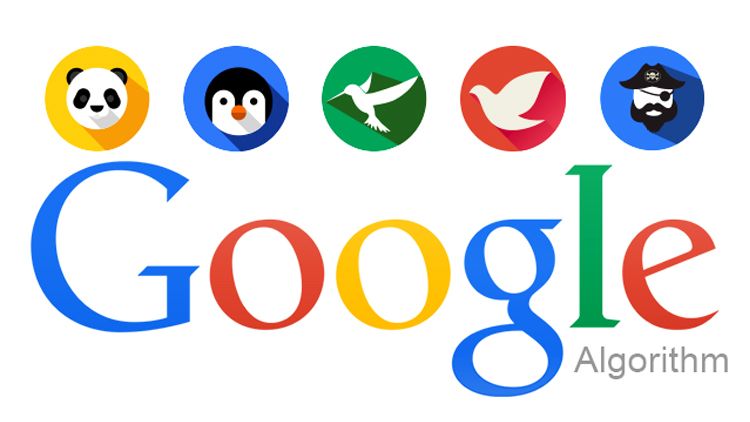
        On an average, Google updates or changes its algorithm nearly 500 times during one year. Most of these updates are usually minor and do not affect SERPs much. Google occasionally rolls out a major update that affects your online presence and search engine optimization (SEO). Here are the major Google algorithm updates in the recent years you need to know.

        PANDA (2011)

        Google’s Panda Update was first launched on 24th February 2011 and has been updated several times. Five years later, that is in 2016, Google added it to the core ranking algorithm. The main purpose of this update is to counter spam and weak content that don’t provide quality to the Internet users. Panda serves this purpose by assigning a quality score to web pages. Avoid plagiarism, spamming and keyword stuffing to avoid Google Panda Penalty.

        PENGUIN (2012)

        On 24th April 2012, Google came with Penguin Update to punish the website that uses spammy, irrelevant or over-optimized anchor text links. Panda works in real time and has been the part of Google’s core algorithm. To avoid penalties run frequent audits to check backlinks. If any low quality or irrelevant link is found, then get rid of them quickly.

        HUMMINGBIRD (2013)

        Hummingbird was launched on 22nd August 2013; the purpose of this update was to provide more relevant and expected results to the users. Here the focus was to bring search results based on the intent behind the search query, rather than individual keywords within the query. As the result of which, Google shows the relevant results in search engine results page that doesn’t necessarily have exact keywords.

        PIGEON (2014)

        Google came up with the Pigeon Update in July 2015 in order to provide precise and relevant results for local search queries. Both Google map search and Google web search are influenced by this update. Google started to use traditional SEO factors to rank local results and established closer ties between the local algorithm and the core algorithm. Pigeon update impact websites negatively that are poorly optimization for search engine.

        MOBILE (2015)

         In April 2015, Google brought a major change in its algorithm in the form of Google Mobile-Friendly Update. The purpose of this update is to prioritize mobile-friendly web pages over the web pages that are not mobile friendly. Consequently, the pages which aren’t mobile friendly are down-ranked. You can find out whether your website is mobile friendly or not via Google’s mobile-friendly test. It can make things easy for you and provide recommendations to fix existing problems.

        RANKBRAIN (2015)

         In October 2015, Google launched RankBrain and confirmed that it is the third most important ranking factor. The prime focus of this update was to make Google understand the meaning behind a search query, and provide the most relevant search results. RankBrain gives consideration to traditional SEO factors and as well as other factors that are query-specific.

        POSSUM (2016)

        Possum came into effect since September 2016. Here the idea was to take the physical location of the searcher into account and provide results relevant to that location. In simple words, if a searcher types “carpenter” in the search box, then he is most likely to get results of carpenters who are near his physical location. This update made things easier for the Internet users and saved time.

        FRED (2017)

        On 8th March 2017, Google confirmed the Fred update. Although this update was confirmed, Google did not reveal any parameters, and only stated that Fred penalizes websites that violate Google Webmaster Guidelines. However, there is a pattern seen in the affected sites. All affected sites are mostly content based sites or blogs that contain low-quality content created for the purpose of generating ad revenue.

        Do you want more traffic?

        Get in contact with our team to chat about what we can do for your brand today.