
Category

Digital Marketing

Website Optimization

Top Ten Practices of Perfectly Optimized Websites

By | Content Marketing, Digital Marketing, Search Engine Optimizaion, Web design, Website

A website is a front door of your company, organization or business. Today, we have a wide range of approaches to build a quality website, but the key characteristics of a good website always remain same. If you are planning to build a new website, or working on an existing site to make it better, then here are the top ten features of a good website to emphasize.

1. Genuine and Quality Content

The ultimate goal of any search engine is to present unique, original and relevant content to the web surfers. Although fresh content gives you more visibility, but that should not be the only thing to focus on. Your content should be able to do below tasks:
● Answer visitors’ questions
● Feed all the necessary information
● Build trust
● Engage audience
● Make a visitor to take action

2. Rapidity

There are many online tools available to test speed of your website. Nobody likes a website which takes more time to load and respond. Slow speed makes a visitor to hit back button. A website which loads within a couple of seconds not only enhances usability, but also search engine ranking.

3. Search Engine Optimized

SEO stands for Search Engine Optimization. It is a technique, which helps you to achieve a higher rank for a particular search query of a web surfer. A website with great content is useless, if no one can find it. A search engine optimized site reaches more people and brings huge traffic.

4. Browser Friendly

There are several browsers available for various devices and operating systems. A website should be compatible with all browsers or at least with popular ones such as Google Chrome, Firefox, Opera, UC, Safari, Internet Explorer etc. A website which isn’t browser-friendly, may not work properly with some browsers and damage user experience.

5. Relevant Appearance

Your website should have relevant appearance, so that your audience can relate to it. For example, a website which provides the live cricket scores should smartly be decorated with former players, cricket grounds, trophies, winning moments, cricket tools, etc., so that a visitor connects with your website and a bond is established.

6. Screen Friendly

Today, the Internet can be accessed through the help of various devices such as mobiles, tablets, laptops and desktops. Each one of them comes with their own screen sizes. Your website should fit across these screen sizes. A website which isn’t screen-friendly makes visitors to scroll horizontally or zoom-in/zoom-out and spoil the user experience.

7. Seamless Navigation

Easy navigation takes a user to the desired places across your website and fulfills his or her needs. The attention span of a website visitor is extremely low. If visitors experience difficulty or confusion to find something, then they might exit your site quickly. Keep the navigation confusion-free and as simple as possible.

8. Social Media Sharing Feature

No doubt, search engine optimization is the best, but solely depending on it is not a good idea. A plugin for social media sharing can drive huge traffic to your website, especially if you have good products, blogs, research data, infographics, etc.

9. Secure

Web surfers are very much concerned about security. Make sure you follow all the guidelines to meet industry standards and ensure optimum security. Use encryption to protect and secure vital data such as passwords. A secure site builds trust and confidence of visitors.

10. Clear CTA

CTA stands for call to action. Terminal goal of any business/organization/company is to make a visitor to take the desired action. Keep easy, simple call to action buttons in appropriate places. At the end of page, it is a good practice to point a user to something useful such as:
● Request a quote
● Download
● Visit
● Share
● Become a member, etc.
Have a Project in Mind?

Get in contact with our team to chat about what we can do for your brand today.


    PPC VS SEO

    Top Reasons To Run PPC And SEO Together

    By | Digital Marketing, Google, Search Engine Optimizaion, SEO & PPC

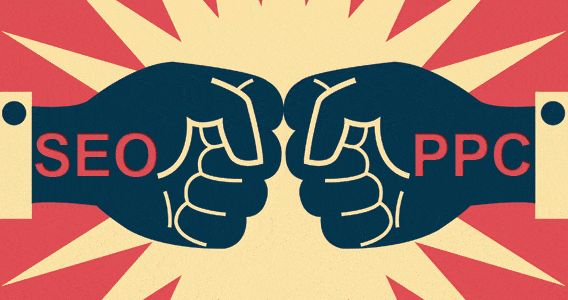
    It is a well-known fact that SEO and PPC are different. But they don’t conflict with each other. On contrary, they compliment each other in multiple ways. If you are running SEO and PPC separately, then you are missing out some awesome benefits of running search engine optimization and pay per click campaign simultaneously. Below are the top reasons why you should be running SEO and PPC together.

    DOMINATE SERP

    Most of the people have a common misconception that there is no necessity of PPC, if search engine optimization is working fine. Running PPC and SEO in parallel, doubles your presence on search engine results page and gives an impression that you have a well-established online presence. Dominating SERP always result in multiplied web traffic.

    PPC HELPS YOU TO EVOLVE ORGANIC CONTENT STRATEGY

    We all know PPC gives quick results compared to search engine optimization. You can smartly test page attributes with the help of pay per click advertisements. A best-performing PPC ad copy gives you a great information that is necessary to create title tags, meta descriptions and page content to rank organically well.

    SITE SEARCH DATA CAN HELP PPC

    Figuring out which keywords your customers are using to find your product or service is an important part of a pay per click strategy. Analyzing site search data can provide the beneficial insights on keywords by feeding two extremely important aspects of the customers:
    1. Customer needs
    2. Search habits

    SEO CAN IMPROVE PPC CONVERSION

    Making a landing page relevant to Ad copy is important to have a better conversion. A customer expects that he should be taken to a page that closely matches the message in ad copy.
    PPC teams usually spend more time on testing and evolving ads. They have little control or authority over a client’s website. If you are running SEO and PPC simultaneously, then SEO team can do this job easily and optimize your landing page.

    Fill THE GAP EASILY

    Search engine algorithms are constantly updated. Due to this, search results are constantly fluctuating. In simple words, if your site holds a top rank for a keyword this week, then it might not be visible in first page of SERPs next week. This makes you lose your hard-earned online presence. In such cases, PPC team can easily fill the gap by increasing keyword bids or by setting up relevant ads.

    TEST IDEAS

    When it comes to results, search engine optimization is slow. It means, if you make few changes to your site, then you have to wait for a long time to know the result. There is no scope of testing in search engine optimization.
    Unlike SEO, PPC is amazingly instant. Within no time, you get data on how a PPC campaign is performing. What works for PPC usually works for SEO. Therefore, you can test new ideas by the help of PPC before implementing in SEO.

    SHARE KEYWORD DATA

    Running SEO and PPC campaign together provide you double data and hence one can have continuous access to best-performing keywords. Analyzing this data gives you plenty of information, which is necessary to make better decisions throughout the campaign. Such insightful data is not available when SEO and PPC are used separately.

    SEO CAN REDUCE PPC COST

    In certain industries, there are keywords that are too expensive to use for PPC. Such costly keywords can eat up your budget. If you are running SEO and PPC together, then you can use these expensive keywords for search engine optimization and target inexpensive keywords with PPC campaigns. In this way, you can reduce the cost of PPC and also achieve a better overall online presence.

    Google Adwords

    How To Run Google Adwords Effectively

    By | Digital Marketing, Google, PPC

    When it comes to online marketing tool, Google AdWords is the king. It allows you to choose when and where to place your advertisements, making it easy to target the audience. As the result of which, you get quality customers in a short period. Below are the few things to keep in mind for running Google AdWords effectively.

    1. Do Proper Research

     Just before going for any marketing strategy, it is advised to do a thorough research. Same thing applies to Google AdWords campaign.

    • Know the purpose of AdWords. Beginners usual take it as a brand awareness tool, which is wrong. AdWords is actually used to increase sales.
    • Analyze whether you can recover the money spent and gain profit.
    • Pick the right keywords, which have high search volumes. Take your time, it is the most important factor.

    2. Making It Effective

    With Google AdWords, you need to pay only when someone clicks on your ad. Therefore, keep two things in mind while writing for your ad.

    1. Your ad should pull relevant traffic.
    2. It should keep irrelevant traffic away.

     3. Add Keywords In Your Copy

     Including keywords in your copy is a good practice. Searchers tend to click ads containing keywords which they are searching for. Just adding keywords in your copy is not enough. Make sure your copy sounds good and catch attention.

     4. Make Many Versions Of Your Ad Copy

    Google allows you to run many versions of your ad copy. It is a good practice to run nearly seven to eight ad copies simultaneously. Based on click through rate, Google will increase or decrease the visibility of a particular version. Delete the versions performing least. Never settle down for one version, keep adding new versions of your copy to beat the current one.

    5. Geo-target your ads

     Geo targeting ads is the best feature which Google AdWords provides. With Geo targeting, you can show your ads in only those regions where you do business and increase your sales. Showing ads in other than your region is irrelevant and waste of money.

    6. Have a Compelling USP

     Your campaign revolves around Unique Selling Proposition (USP). Having a strong USP is basic and gives benefits while running a campaign.

    • USP increases quality leads.
    • It also increases the conversion rate.
    • It prevents unwanted leads and saves money.
    • Having a powerful USP, distinguishes you from your competitors.

    7. Target Time

     Find out when your ideal customers are online. Show your ads only when your potential customers are online. This again makes your Google AdWords campaign cost-effective and save money. It is most helpful when you are in a b2b space. You can run your ads during daytime and skip at night.

    8. Keep an Eye On Competitors

     Try to know what your competitors are doing by keeping an eye on their ads. If your competitors are regularly using a specific ad text, it means it is performing good for them. This is how you know what is working out in the market. Taking reference of that copy, create better versions.

    Do you want more traffic?

    Get in contact with our team to chat about what we can do for your brand today.